
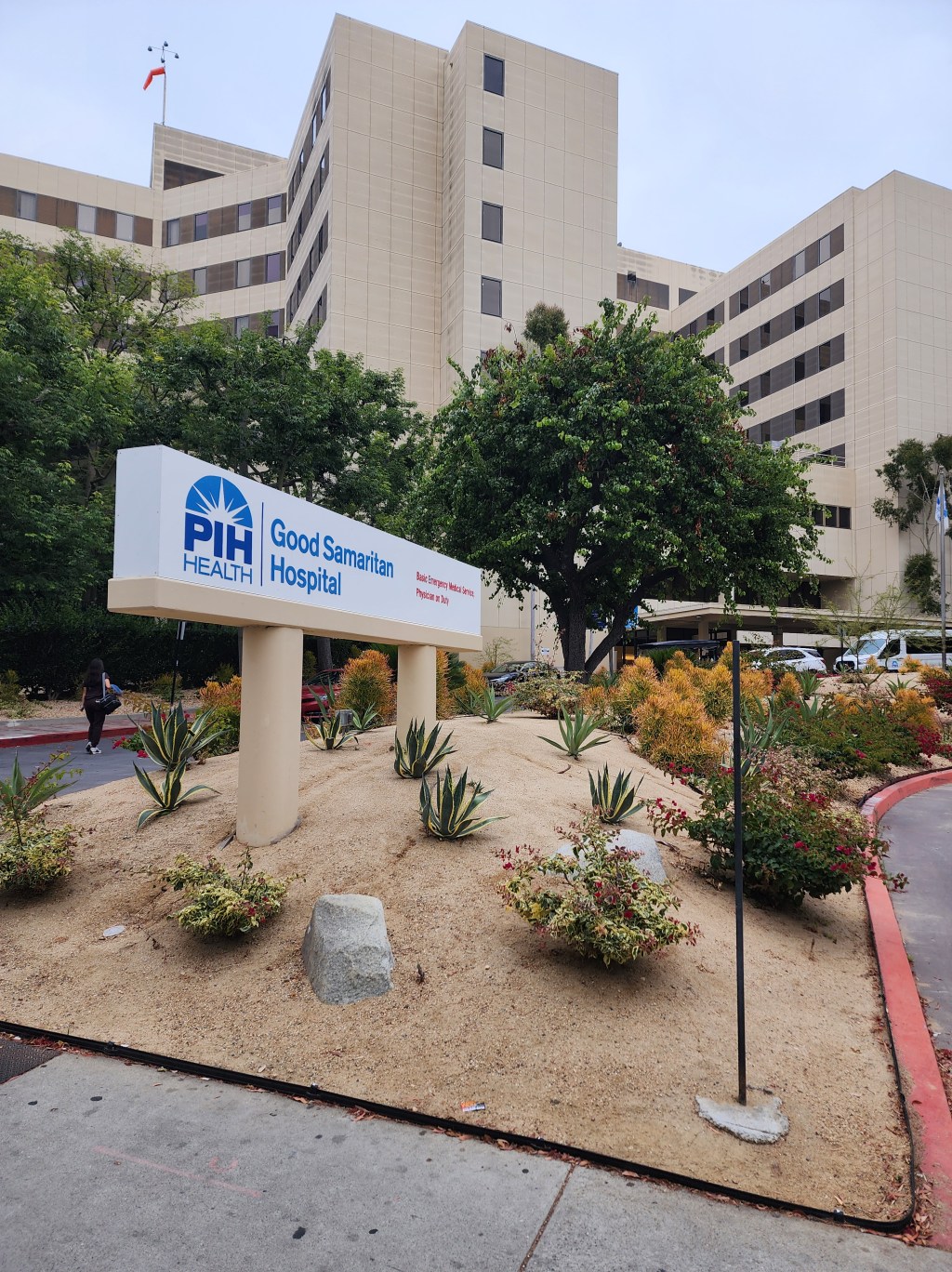
I completed my first week of CPE training at Good Samaritan Hospital, and it was quite an experience. Between classes and seminars, getting my badge, uniform, and computer access, and making rounds on the hospital floors, the week was full. I tried to stay open in heart and mind and take it all in. As I reflected on the experience, one thing stood out to me: the hospital’s name, Good Samaritan Hospital. There are many hospitals, so why did I come to this one? I believe life is not ruled by accidents. I also believe that while God does not determine every small detail, He is sovereign over all things. He may not decide what I wear or eat each day, but I do believe He guides my life by giving me wisdom for the choices I make. For that reason, I do not see it as a coincidence that I was accepted as a chaplain intern at Good Samaritan Hospital.
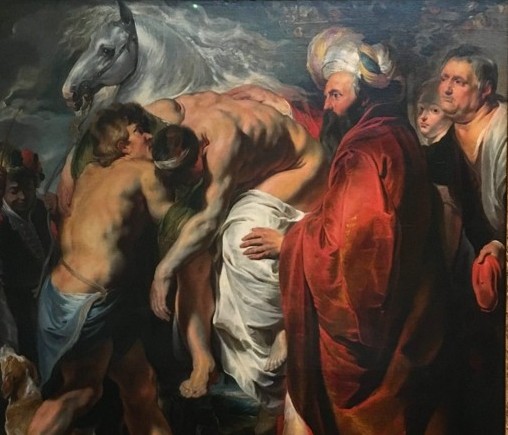
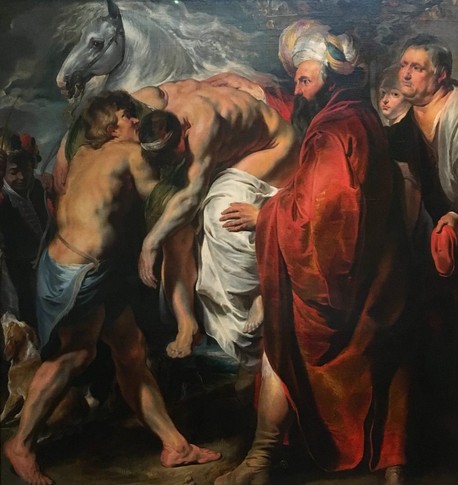
The painting above, the Good Samaritan by Jacob Jordaens, was hanging in the chapel. Jesus told the story of the Good Samaritan in Luke 10:25–37 during a conversation with a lawyer to show what it means to love God and love your neighbor as yourself. Seeking to justify himself, the lawyer asked, “And who is my neighbor?” In response, Jesus told the parable of the Good Samaritan. I want to retell that story in a modern setting. Imagine a shop owner on his way to open his store when thieves attack him, rob him, and leave him injured and bleeding against a building. A hospital is nearby, and a doctor passes on the way to the parking garage. Thinking, “I just finished an 18-hour shift. I’m exhausted, and surely another doctor or nurse will help,” he continues to his car. Next, a pastor like me walks by and thinks, “I’m late for a visitation, and with a hospital so close, someone else will surely help him.” Then a firefighter passes, distracted by a phone, and keeps walking. Finally, a street cleaner notices the injured man and helps him get to the emergency room.

The lesson of the story is that those who had the training and ability to help were too tired, too busy, or too distracted to stop. Instead, the person who helped was someone unexpected, someone without special training but with compassion and love. That is the difference. Love is more than an idea, a word, or a feeling. It is expressed through action. Jesus told the parable of the Good Samaritan in response to the lawyer’s question, “Who is my neighbor?” But that was the wrong question. A better question is, “Whose neighbor am I?” Being a neighbor is not about limiting concern to the people within my circle. It is about showing love to everyone I meet and helping anyone in need.
At the hospital, I saw patients recovering from both simple and complex procedures. Some could move on their own, while others could not move at all. I met people of different ages, backgrounds, languages, and faiths. Some spoke English, while others spoke Korean or Spanish. People identified as Catholic, Protestant, Jewish, Muslim, or Jehovah’s Witness, and some did not identify with any religion. One patient even asked us to leave when we introduced ourselves as chaplains. Despite their differences, they all needed care. They had come to Good Samaritan Hospital because they were in need. I realized that my responsibility as a chaplain was to serve everyone in my unit, regardless of who they were. I was there as a hospital employee, not for my own purposes. To the patients, I represented the hospital, and they expected me to help them.

Name is important. Names matter because they create expectations. At Starbucks, you expect coffee, not only water. At El Cholo, you expect Mexican food, not Korean food. At Jiffy Lube, you expect an oil change, not a car wash. In the same way, people come to a hospital expecting care and healing, not to be turned away. The word “hospital” itself suggests treatment for physical needs. Even more, the name “Good Samaritan Hospital” carries an expectation of goodness, mercy, and compassionate care. Whether or not patients know Jesus’ story, they at least expect “good” treatment. As staff members—doctors, nurses, social workers, and chaplains—our role is to be a “Good Samaritan” to everyone we encounter who is in need. I do not believe I am here by accident. I believe God led me here to ask the right question, “Whose neighbor am I?” and to teach me, through action, what it means to be compassionate, merciful, and empathetic toward people in need.

 Word-Centered Living
Leave a comment