“Fools mock at making amends for sin, but goodwill is found among the upright.” (Proverbs 14:5-11, NIV)
Today’s reading is a warning against a hard, prideful heart. It makes us believe that we are right even when we are clearly in the wrong. Instead of acknowledging our wrongdoings and making things right, we choose stubbornness, even mocking the process of reconciliation. Making a mistake is human, but refusing to fix it is a spiritual problem. It is because when we choose to ignore our sins, whether they are offenses against God or against our neighbors, we are turning our backs on God’s love and His redemptive plan. So, don’t mock the act of making things right. True wisdom recognizes the serious consequences of sin, gives thanks to God for forgiveness through Jesus, and humbly does the work of making things right with God and with others. Here is what it says in today’s passage:
“An honest witness does not deceive, but a false witness pours out lies. The mocker seeks wisdom and finds none, but knowledge comes easily to the discerning. Stay away from a fool, for you will not find knowledge on their lips. The wisdom of the prudent is to give thought to their ways, but the folly of fools is deception. Fools mock at making amends for sin, but goodwill is found among the upright. Each heart knows its own bitterness, and no one else can share its joy. The house of the wicked will be destroyed, but the tent of the upright will flourish.”
To me, verse 9 jumps out in bold letters, warning me about pride and hardness of heart. The verse says that fools “mock at making amends for sin,” while the upright find peace and favor. This statement is not simply about refusing to say, “I’m sorry,” or poking fun at people trying to make up. It is about making a mockery of God’s provision for reconciliation, whether with God or other people. In Hebrew, the phrase “making amends for sin” is a single word: “asham.” The word means “offense, trespass, guilt, guilt offering, or trespass offering.” The word is used in the Law of Moses to describe making an atonement for sin. Leviticus 5:5-6 says, “So it shall be when he becomes guilty in one of these, that he shall confess that in which he has sinned. He shall also bring his guilt offering to the LORD for his sin which he has committed, a female from the flock, a lamb or a goat as a sin offering. So the priest shall make atonement on his behalf for his sin.” Therefore, the context in which Solomon is making this statement is about a person making a mockery of God’s provision for reconciliation. If someone hurt another person or stole something, they could not just say “sorry” and walk away. God commanded them to pay back what they ruined, add extra to it, and bring a sacrifice to the altar. It was called the “guilt offering.”
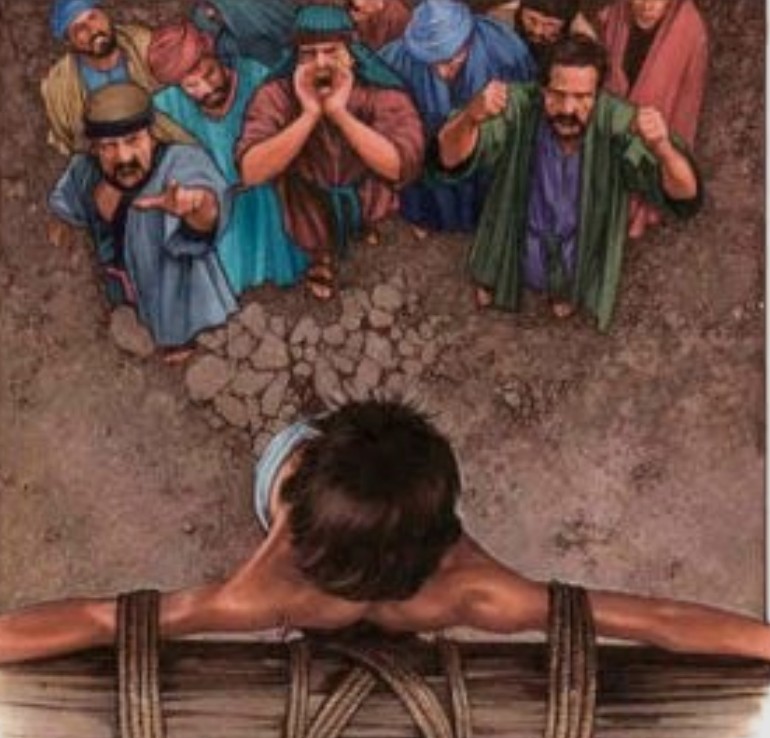
This sacrifice was God’s holy provision for making amends for sin. Further, this sacrificial provision ultimately foreshadowed what Christ would do on the cross to make amends for the sins of all mankind (1 Pet.1:18-19). Therefore, to mock making amends for sin was insulting the very path God made to save humanity. Today, Christians do not bring animal sacrifices to an altar anymore because God provided the ultimate sacrifice. Because of this, we simply need to confess our sins, based on the death of Jesus on the cross, and find forgiveness. And we can also reconcile our relationships as brothers and sisters by asking for or granting forgiveness through Christ and his work on the cross. 1 John 1:9-10 says, “If we confess our sins, He is faithful and righteous to forgive us our sins and to cleanse us from all unrighteousness. If we say that we have not sinned, we make Him a liar, and His word is not in us.” Mocking the act of making things right is a direct rejection of Christ’s work on the cross and is in danger of insulting the very grace of God. Don’t mock the act of making things right as provided by God.
- Why do you think some people mocked the idea of making amends for sin in Solomon’s days?
- Why do people reject the cross of Christ as a means of reconciling with God and others?



 word-centered living
Leave a comment