
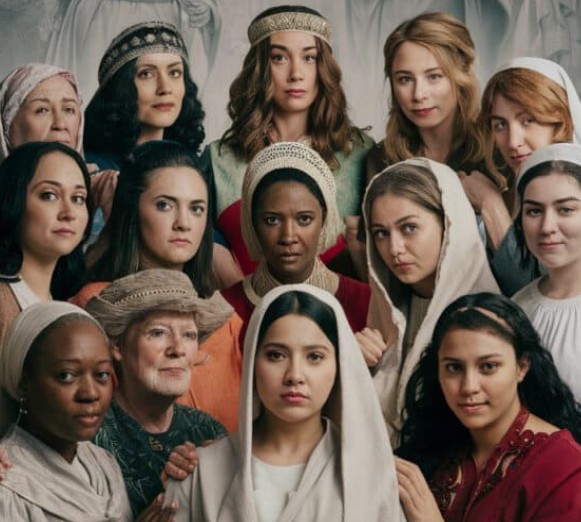
“With the women of Benjamin destroyed, how shall we provide wives for the men who are left?” (Judges 21:16-25, NIV)
We come to the final section of the book of Judges, and I want to say a few words on behalf of the women. Chapters 19-21 deal with the story of the Levite whose concubine was raped and murdered, and it escalated into a full-blown war between the Benjamites and the rest of the tribes of Israel. The Benjamites lost the war and were left with only 600 men. In this final section, the Israelites tried to provide wives for the surviving Benjamites from Jabesh-Gilead by force, but fell short of 200 women. Then they came up with a solution to let the remaining 200 go and abduct girls who would come to dance at Shiloh to worship for their wives. It says,
“And the elders of the assembly said, ‘With the women of Benjamin destroyed, how shall we provide wives for the men who are left? The Benjamite survivors must have heirs,’ they said, ‘so that a tribe of Israel will not be wiped out. We can’t give them our daughters as wives, since we Israelites have taken this oath: ‘Cursed be anyone who gives a wife to a Benjamite.’ But look, there is the annual festival of the Lord in Shiloh, which lies north of Bethel, east of the road that goes from Bethel to Shechem, and south of Lebonah.’ So they instructed the Benjamites, saying, ‘Go and hide in the vineyards and watch. When the young women of Shiloh come out to join in the dancing, rush from the vineyards and each of you seize one of them to be your wife. Then return to the land of Benjamin. When their fathers or brothers complain to us, we will say to them, ‘Do us the favor of helping them, because we did not get wives for them during the war. You will not be guilty of breaking your oath because you did not give your daughters to them.’’ So that is what the Benjamites did. While the young women were dancing, each man caught one and carried her off to be his wife. Then they returned to their inheritance and rebuilt the towns and settled in them. At that time the Israelites left that place and went home to their tribes and clans, each to his own inheritance. In those days Israel had no king; everyone did as they saw fit.”
I want to say a few words on behalf of the women here. Where are the rights of women in this story? Who showed concern for these women? Who spoke up on behalf of these women? No one. The men in the story were passionately concerned about justice for the Levite, punishing the wicked Benjamites, winning the war, crying over the imminent extinction of one of their tribes, finding a solution to provide wives for Benjamite survivors, and trying hard not to break their oaths. They were concerned about everything but the women they were abusing. The whole incident started with the rape of one woman, and it ended with the rape of 600 women. While wicked men raped the concubine, the 600 women were raped by self-righteous Israelites.
These men were concerned with the question, “With the women of Benjamin destroyed, how shall we provide wives for the men who are left?” Now I wonder how God genuinely felt during this whole time. God never commanded them to destroy anyone utterly. They came up with that idea all on their own. It says that no king, and everyone did as they saw fit. In fact, if these men were really trying to do what they vowed, then they should have killed the remaining 600 Benjamites, too. However, if they were sincerely trying to keep the tribe of Benjamin alive, then they should have at least spared 600 women from the Benjamite tribe. Instead, they killed off all the Benjamite women, and now they were trying to find wives from Jabesh-Gilead and girls of Shiloh. And they were not taking volunteers. They were taking them by force. To me, the actual victims in this story are the women—the concubine, the virgins of Jabesh-Gilead, and the daughters of Shiloh.
To me, every man in this story was acting in a self-righteous manner. Every man thought he was being honorable, but where is the honor in treating these women like this? We’ve come a long way since those days, but we are still a long way off. In addition to the primary mission of preaching the gospel, Jesus always stood by, spoke on behalf of, and defended the defenseless in society, the sick, the poor, and even the adulterous woman. In 1 Peter 3:7, the Bible instructs men to live with their wives “in an understanding way, as with a weaker vessel, since she is a woman; and grant her honor as a fellow heir of the grace of life, so that your prayers may not be hindered.” We are to “understand” and grant “honor” to our women. And as Christian men, shouldn’t we be doing the same?
- Why do you think the men in this story were concerned about everything but the women?
- What do you think it means for husbands to live with their wives in an “understanding way?”



 word-centered living
Leave a comment