
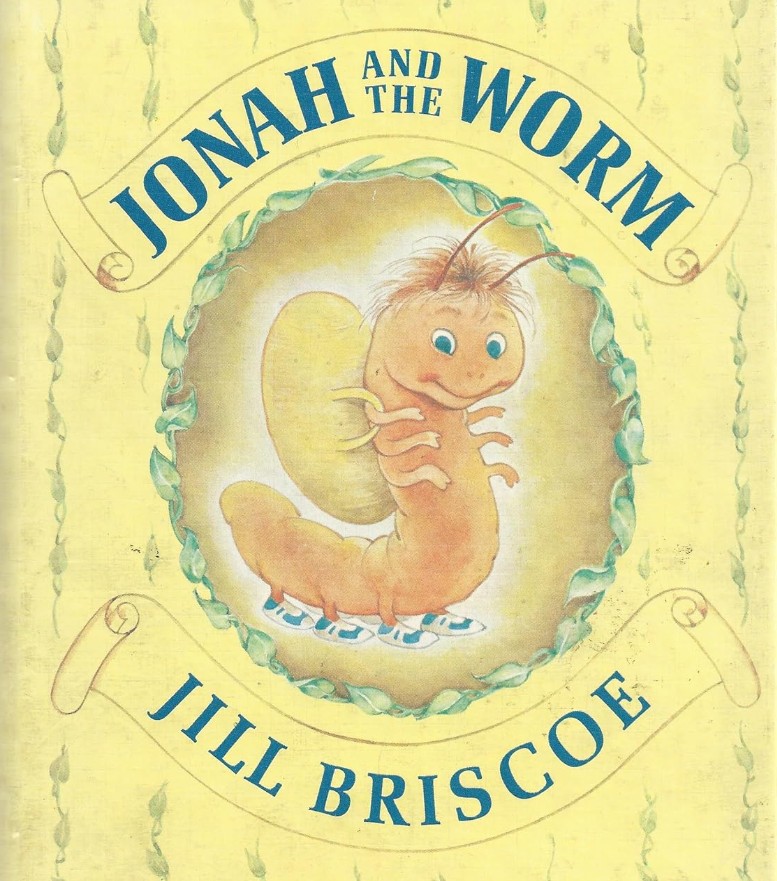
This is a children’s book titled “Jonah and the Worm” by Jill Briscoe. Interestingly, I was introduced to this book during one of my seminary courses. In the early 1990s, I attended Dr. Charles VanEngen’s Biblical Foundations of Mission class and diligently followed along with his syllabus. To my surprise, I observed that this children’s book was included as one of the required texts! As the course progressed over several weeks, it became clear why Dr. VanEngen had incorporated this book into the syllabus. I gained valuable insights from its message and remain grateful to Dr. VanEngen for this enlightening experience.
The narrative is simple, recounting the story of Prophet Jonah from the perspective of the worm that “attacked the plant and it withered” (Jonah 4:7). The book features three primary characters: Little Worm (the worm), the Worker (Jonah), and Wonder Maker (God). It delves into the distinct paths taken by the obedient (the worm) and the disobedient (the worker) and how they converge at the conclusion of the story. The central theme of the story is that all characters, including the worm, wind, sailors, whale, king, people of Nineveh, plant, and sun, comply with the commands of God. The sole exception is Jonah, who is expected to be God’s servant but fails to obey. Dr. VanEngen used this message to challenge the class, leading to the recognition of a little bit of Jonah within ourselves. Like Jonah, we often prioritize temporal matters over the eternal fate of lost souls.
The book of Jonah does not tell us how Jonah responded to God’s rebuke. It’s better that way because it speaks to every one of us to respond in personal way. I’ll leave you with the final words that God gave to Jonah:
“You feel sorry about the plant, though you did nothing to put it there. It came quickly and died quickly. But Nineveh has more than 120,000 people living in spiritual darkness, not to mention all the animals. Shouldn’t I feel sorry for such a great city?” (Jonah 4:10-11, NLT)



 word-centered living
Leave a comment