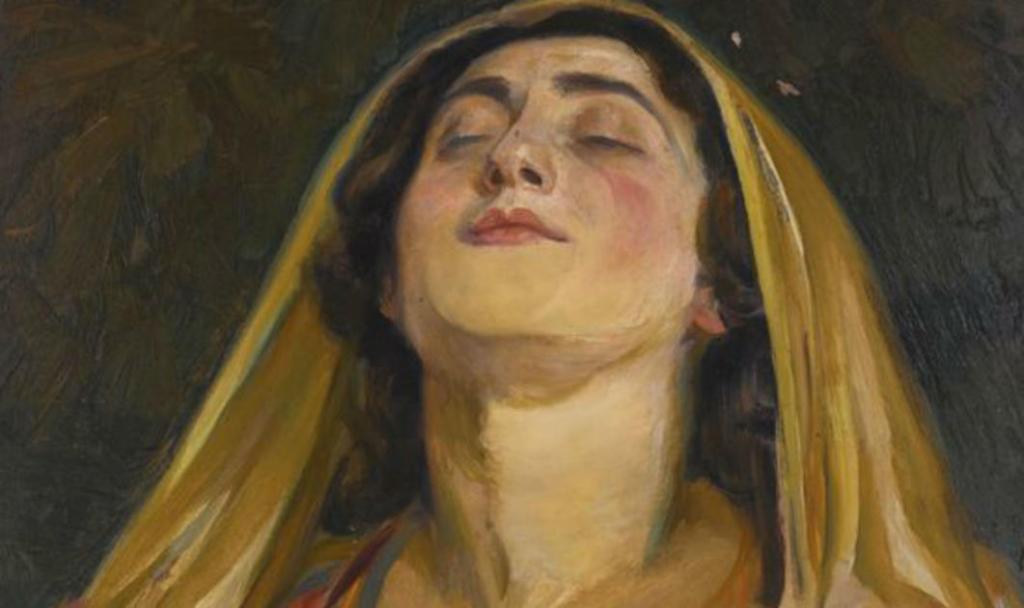
“…and she named him Samuel, saying, ‘Because I have asked him of the LORD.’” (1 Samuel 1:20, NASB)

Jesus once instructed his disciples with the words, “Ask, and it shall be given to you; seek, and you shall find; knock, and it shall be opened to you” (Mt.7:7). This passage is likely familiar to many. According to Jesus, praying and receiving responses to prayers seemed straightforward as “asking, seeking, and knocking.” However, in my over 30 years of living as a Christian, I have come to understand that it is not quite so simple. There are numerous factors and conditions involved in petitioning God. In my view, the prayer of Hannah, mother of Prophet Samuel, complements Jesus’ teaching on prayer. It gives us an anatomy of prayer, a detailed framework, illustrating what encompasses asking, seeking, and knocking in prayer. Here is my take on Hannah’s prayer (1 Sam.1:1 – 2:21).

1. The Problem of Hannah
The first thing we see is the problem that Hannah had. A man named Elkanah had two wives, one of whom was Hannah. While her opponent had children, Hannah was barren because “the LORD had closed her womb.” Unlike her counterpart, who bore children, Hannah remained childless as “the LORD had closed her womb.” To exacerbate matters, her rival would provoke her incessantly, causing deep distress. This situation became so overwhelming that Hannah wept bitterly, refrained from eating, and experienced profound heartache. Problems in life can often be viewed as blessings in disguise. Without these challenges, it is unlikely that any of us would seek divine intervention. In Hannah’s case, her struggles were ordained by God. Nevertheless, other factors may also contribute to the rise in problems. They could arise as consequences of one’s own transgressions or those of others. Regardless of their origin, all problems share a common outcome: they drive us toward God, as He is the only one capable of resolving them. While many causes may lead to problems, there is only one way to solve them—bringing them before God.

2. The Prayer of Hannah
The second part is Hannah’s prayer itself. Several notable elements were significant in her prayer, including its intensity, duration, faith, and the making of a vow. Each of them begs the question as to how much of it is needed to be heard by God. First. concerning the intensity of prayer, it says that Hannah, “greatly distressed, prayed to the LORD and wept bitterly” (1 Sam.1:10). She has also expressed, “I am a woman oppressed in spirit; I have drunk neither wine nor strong drink, but I have poured out my soul before the LORD… for I have spoken until now out of my great concern and provocation” (1 Sam.1:15-16). We need passion and zeal in our prayers, but we cannot manufacture them. They arise out of our pain, suffering, and burdens. The amount of intensity arises from the level of desperation we feel in our pain. Secondly, regarding the duration of prayer, it is evident that Hannah prayed for a child over an extended period. This conclusion can be drawn from her consistent visits to the house of the LORD “year after year,” with her prayer in chapter 1 being the culmination of many years of supplication. In addition to fervor and enthusiasm, persistence is required in our prayers. We must continue to ask, seek, and knock. Unless instructed otherwise by God (2 Cor. 12:7-9), we should not give up. Thirdly, concerning faith in prayer, Hannah clearly demonstrated in her prayer. This is demonstrated by her reaction to Eli’s words of encouragement. When Eli stated, “Go in peace; and may the God of Israel grant your petition that you have asked of Him,” Hannah went on her way, “ate, and her face was no longer sad” (1 Sam.1:17-18). It seems she accepted the priest’s words with faith, believing that God would fulfill her request for a child. As Hebrews 11:1 state, “Now faith is the assurance of things hoped for, the conviction of things not seen.” Lastly, there is the question of making a vow in our prayers. In the climax of her prayer, Hannah made a vow, “O LORD of hosts, if Thou wilt indeed look on the affliction of Thy maidservant and remember me, and not forget Thy maidservant, but wilt give Thy maidservant a son then I will give him to the LORD all the days of his life, and a razor shall never come on his head” (1 Sam.1:11). To be clear, there is no biblical precedent that says we need to make a “vow” for God to answer our prayers. In fact, vows made from desperation can become a great disaster as God’s Law requires that we keep all our vows (Deut.23:21-23). Remember what happened to Jephthah when he made a vow to sacrifice to the Lord the first thing that comes out of his house if he was victorious in battle. He ended up sacrificing his own daughter! (Jud.11:30-40) In principle, however, making a vow is about making some sacrifice of your life, and seeking to give honor to God with the things He’s given you. What are you willing to give up and how do you seek to glorify God?

3. Provision for Hannah
The third part of the anatomy of prayer examines how God responded to Hannah and fulfilled her request. As stated, “Then they arose early in the morning and worshiped before the LORD, and returned again to their house in Ramah. And Elkanah had relation with Hannah his wife, and the LORD remembered her. And it came about in due time, after Hannah had conceived, that she gave birth to a son; and she named him Samuel, saying, ‘Because I have asked him of the LORD’” (1 Sam.1:19). God performed a miracle for Hannah. Nevertheless, the process of conception and childbirth occurred through natural means. God did not create a child ex nihilo nor deliver him via an angelic messenger. Everything transpired naturally. The sole indication that God’s involvement is acknowledged is the phrase “the LORD remembered her.” This implies that while waiting for divine intervention, individuals must exert their utmost efforts. When we fulfill our responsibilities to the best of our ability, God will undertake what we cannot. Hannah’s faith is further exemplified as she names her son Samuel, which signifies “God hears” or “heard of God.” As a result of her faith and dedication of Samuel, God blessed her with more children (1 Sam.2:21). It shows that when God is honored, He will answer us “exceeding abundantly beyond all that we ask or think, according to the power that works within us” (Eph.3:20).

4. Praise of Hannah
The final section of the anatomy of prayer focuses on Hannah’s praise and gratitude to God. She begins by stating, “My heart exults in the LORD; my horn is exalted in the LORD” (1 Sam. 2:1). This indicates that she was no longer sad but filled with joy and happiness. This transformation exemplifies the impact of experiencing God’s response to our prayers. Beyond the joy derived from answered requests, there is an overwhelming sense of fulfillment knowing that the Almighty has heard our prayers. Hannah’s praise further elaborates on the nature of God, describing Him as all-wise, all-knowing, all-good, all-loving, all-righteous, and all-powerful. This revelation of God’s characteristics becomes more personal and profound, transcending mere intellectual understanding. It demonstrates that God desires to answer our prayers to foster a deeper, more intimate relationship with Him through genuine praise and worship. Let the prayer of Hannah provide insight into Jesus’ teaching, “Ask, and it shall be given to you; seek, and you shall find; knock, and it shall be opened to you.”



 word-centered living
Leave a comment