

What names come to your mind when considering what it means to be a godly father? Maybe someone like Abraham, Jacob, David, Joseph (Jesus’ father), or Peter? Today, I wanted to talk about Job as an example of a godly father and draw some applications for Christian parents in today’s context. It says in Job 1:4-5:
“There was a man in the land of Uz, whose name was Job, and that man was blameless, upright, fearing God, and turning away from evil. And seven sons and three daughters were born to him. His possessions also were 7,000 sheep, 3,000 camels, 500 yoke of oxen, 500 female donkeys, and very many servants; and that man was the greatest of all the men of the east. And his sons used to go and hold a feast in the house of each one on his day, and they would send and invite their three sisters to eat and drink with them. And it came about, when the days of feasting had completed their cycle, that Job would send and consecrate them, rising up early in the morning and offering burnt offerings according to the number of them all; for Job said, ‘Perhaps my sons have sinned and cursed God in their hearts.’ Thus Job did continually.”

I found something interesting about Job as a godly and spiritual father in this passage. In general, when people read and talk about the Book of Job, they bring up subjects like trials in life, spiritual warfare, or God’s purpose for suffering. Yet, have you ever considered Job as an example of what it means to be a godly father? The last part of this passage ends with the statement, “Thus Job did continually.” So, what did Job do continually? It says that Job had seven sons and three daughters, and each of the sons threw a party for the family once a year. Since there were seven men, we could assume seven events throughout the year. After each party, Job would gather and consecrate them in case they sinned and cursed God in their hearts.
Notice the description given: “early morning,” “offering burnt offerings,” and “according to the number of them all.” It’s a pretty detailed and thorough consecration process, in my opinion. This is what Job did continually for his sons and daughters. Further, Job did this for his sons and daughters who were married with children. Fathers’ priestly work does not end when their children get married and move away but continues on! What a beautiful picture of godly leadership! I think this is what spiritual leadership is all about, and I want to introduce the concept of spiritual leadership as priestly fathers or leaders. Maybe this is one of the main reasons God attributed him as a “blameless, upright, fearing God, and turning away from evil” kind of man. So, this begs the question of whether Job’s leadership as a priestly leader for family and faith congregation was an isolated case. Let’s do a quick Bible survey and see that it was not just Job who did this continually.
Abraham
“Then he proceeded from there to the mountain on the east of Bethel, and pitched his tent, with Bethel on the west and Ai on the east; and there he built an altar to the Lord and called upon the name of the Lord.” (Gen.12:8)
Israel
“Now then, if you will indeed obey my voice and keep my covenant, then you shall be my own possession among all the peoples, for all the earth is mine; and you shall be to me a kingdom of priests and a holy nation.” (Ex.19:5-6)
Jesus (Our greatest example)
“Since then we have a great high priest who has passed through the heavens, Jesus the Son of God, let us hold fast our confession.” (Heb.4:14)
“Christ Jesus is he who died, yes, rather who was raised, who is at the right hand of God, who also intercedes for us.” (Rom.8:34)
Church
“But you are a chosen race, a royal priesthood, a holy nation, a people for God’s own possession…” (1 Pet.2:9)
“Or do you not know that your body is a temple of the Holy Spirit who is in you…” (1 Cor.6:19)
In Heaven
“…and he has made us to be a kingdom of priests to His God and Father.” (Rev.1:6)
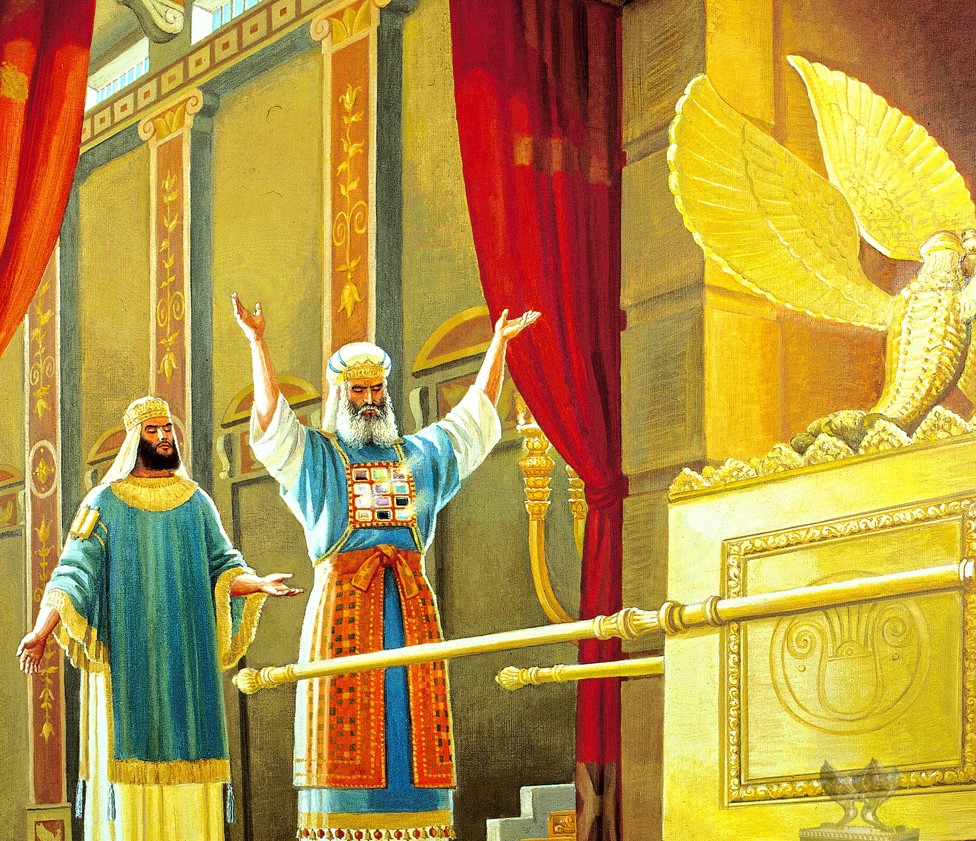
What do these passages and examples say about “spiritual leadership” or “priestly leadership” as a leader at home, church, or even community? I want to suggest that God has called us to be “priestly leaders” today. It means that we, as fathers in homes and churches, are called to be mediators between God and people. Imagine this scenario for a moment. What if your pastor did many things well but never prayed for you? Would you want him as your pastor? On the other hand, what if your pastor prayed 24/7 for you but did not do other things particularly well? Would you hire him as your pastor? Most congregations would want their pastors to be great prayer warriors rather than great preachers, administrators, or counselors. Do you agree? In a sense, you are the senior pastor of your family, and your wife is the assistant pastor. So, why would you not pray for your family? We are to be ambassadors wherever we are and where we go: as sons, husbands, fathers, brothers, employers, employees, teachers, students, church leaders or members, citizens of a nation. However, you are to start from your home and with your family. If this is true, our mission, if you choose to accept it, is to live as priests of God. So, how can we biblically and practically mediate as priestly leaders or fathers for our loved ones? Here are some biblical mandates for prayer ministry for priestly leadership:
1. We ought to offer up praise and thanksgiving to God
“Through him (Jesus) then, let us continually offer up a sacrifice of praise to God, that is, the fruit of lips that give thanks to His name.” (Heb.13:15)
“Rejoice always, pray without ceasing, in everything give thanks, for this is God’s will for you in Christ Jesus.” (1 Thess.5:16-18)
2. We ought to intercede for the church, the body of Christ, or the people of God
“With all prayer and petition pray at all times in the Spirit, and with this in view, be on the alert with all perseverance and petition for all the saints, and pray on my behalf, that utterance may be given to me in the opening of my mouth, to make known with boldness the mystery of the gospel.” (Eph.6:18-19)
3. We ought to provide spiritual leadership for our family
“Husbands, love your wives, just as Christ loved the church…” (Eph.5:25)
“And fathers, do not provoke your children to anger; but bring them up in the discipline and instruction of the Lord.” (Eph.6:4)
“He must be one who manages his own household well, keeping his children under control with all dignity, but if a man does not know how to manage his own household, how will he take care of the church of God?” (1 Tim.3:4-5)
“You husbands likewise, live with your wives in an understanding way, as with a weaker vessel, since she is a woman; and grant her honor as a fellow heir of the grace of life, so that your prayers may not be hindered.” (1 Pet.3:7)
4. We ought to be an ambassadorship to the lost around us
“Therefore, we are ambassadors for Christ, as though God were entreating through us.” (2 Cor.5:20)
“First of all, then, I urge that entreaties and prayers, petitions and thanksgivings, be made on behalf of all men…” (1 Tim.2:1)
“And Abraham came near and said, ‘Wilt Thou indeed sweep away the righteous with the wicked? Suppose there are fifty righteous within the city; wilt Thou indeed sweep it away and not spare the place for the sake of the fifty righteous who are in it?’” (Gen.18:23-24)
5. We ought to intercede for world leaders
“First of all, then, I urge that entreaties and prayers, petitions and thanksgivings, be made on behalf of all men, for kings and all who are in authority, in order that we may lead a tranquil and quiet life in all godliness and dignity.” (1 Tim.2:1-2)
6. We ought to intercede for people who are sick and needy
“Is anyone among you sick? Let him call for the elders of the church, and let them pray over him, anointing him with oil in the name of the Lord, and the prayer offered in faith will restore the one who is sick, and the Lord will raise him up, and if he has committed sins, they will be forgiven him.” (Ja.5:14-15)
7. We ought to intercede for the mobilization of God’s mission
“Pray, then, in this way: Our Father who art in heaven, hallowed by Thy name. Thy kingdom come, Thy will be done, on earth as it is in heaven.” (Mt.6:9-10)
“The harvest is plentiful, but the workers are few. Therefore, beseech the Lord of the harvest to send out workers into His harvest.” (Mt.9:37-38)
Living as a priestly leader comes down to three essential mandates. We are to be:
- A Voice of Intercession – We are to talk to God on behalf of the people around you
- A Voice of Prophecy – We are to talk to people on behalf of God
- A Voice of Edification – We are to it all to build up the body of Christ

Furthermore, since the Bible says that our body is the temple of the Holy Spirit, we do not need to go too far to do our priestly ministry. 1 Corinthians 3:16 says, “Do you not know that you are a temple of God, and that the Spirit of God dwells in you?” Again, 1 Corinthians 6:19 says, “Or do you not know that your body is a temple of the Holy Spirit who is in you, whom you have from God, and that you are not your own?” We no longer have to be in Jerusalem or the temple there, as in the Old Testament priesthood. Christ has sent the Holy Spirit into our hearts so that our bodies are now the temple of the living God. Jesus himself is our “Great High Priest” who is in heaven interceding for us and calling us to draw near to the “Throne of Grace” to find grace and mercy in time of our need (Heb.4:14-16). Yes, the mercy seat in the Old Testament holy of the holies where the high priest would sprinkled the Yom Kippor blood once a year is now called the Throne of Grace! And we can draw near to it at any time! Apostle Peter explains this to us, “And coming to Him as to a living stone, rejected by men, but choice and precious in the sight of God, you also, as living stones, are being built up as a spiritual house for a holy priesthood, to offer up spiritual sacrifices acceptable to God through Jesus Christ” (1 Pet.2:4-5). Again, he says, “But you are a chosen race, a royal priesthood, a holy nation, a people for God’s own possession, that you may proclaim the excellencies of Him who has called you out of darkness into His marvelous light; for you once were not a people, but now you are the people of God; you had not received mercy, but now you have received mercy” (1 Pet.2:9-10). As Christians, we have a new identity and calling as the new people of God.

The lasting that I want to leave you with is some negative examples of fathers as priestly leaders.
- Adam – He sent the whole human race down the path of sin and death & did not teach his children how to do it right
- Achan – He caused his whole family to die by stoning and burning and brought shame to his tribe
- Nabal – He almost caused his whole family to be killed had it not for his wife, Abigail
- Ahab – He was a coward king who allowed his wicked wife to disintegrate the nation’s morality
- Judas Iscariot – He was a betrayer whose name will forever be tied to a negative impression
- Ananias – He caused himself and his wife to die
- Demas – He caused his family to turn away from God
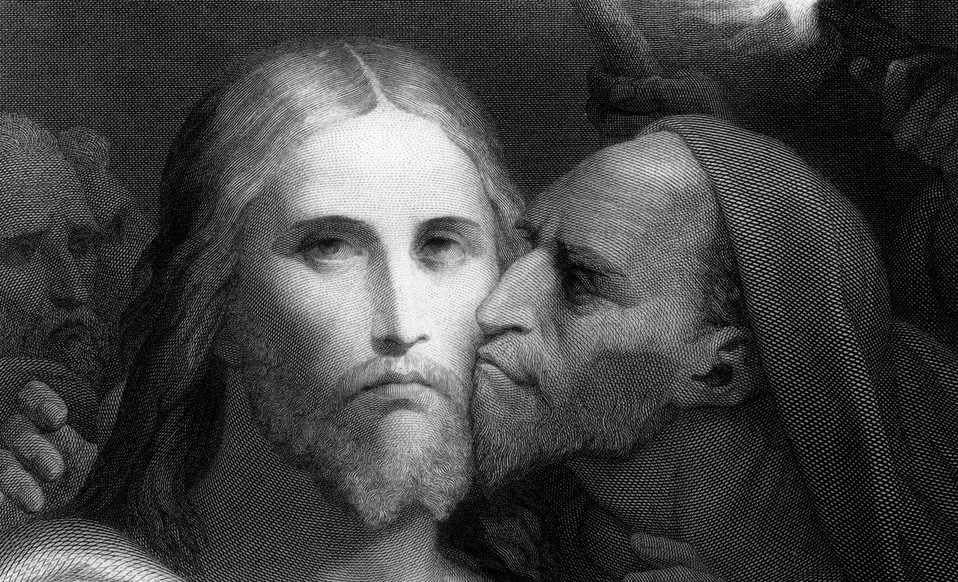
In conclusion, let us consider Job as a godly father for his family and spiritual leader for his community, not only as an example of someone who overcame suffering but also as one who provided priestly leadership. He interceded for his sons and daughters by consecrating them with burnt offerings and was known in his community as a man fearing God and living righteously. Perhaps, in this characteristic of priestly leadership, we can genuinely discover Job’s secret to being known as a righteous man in the eyes of God.



 word-centered living
Leave a comment